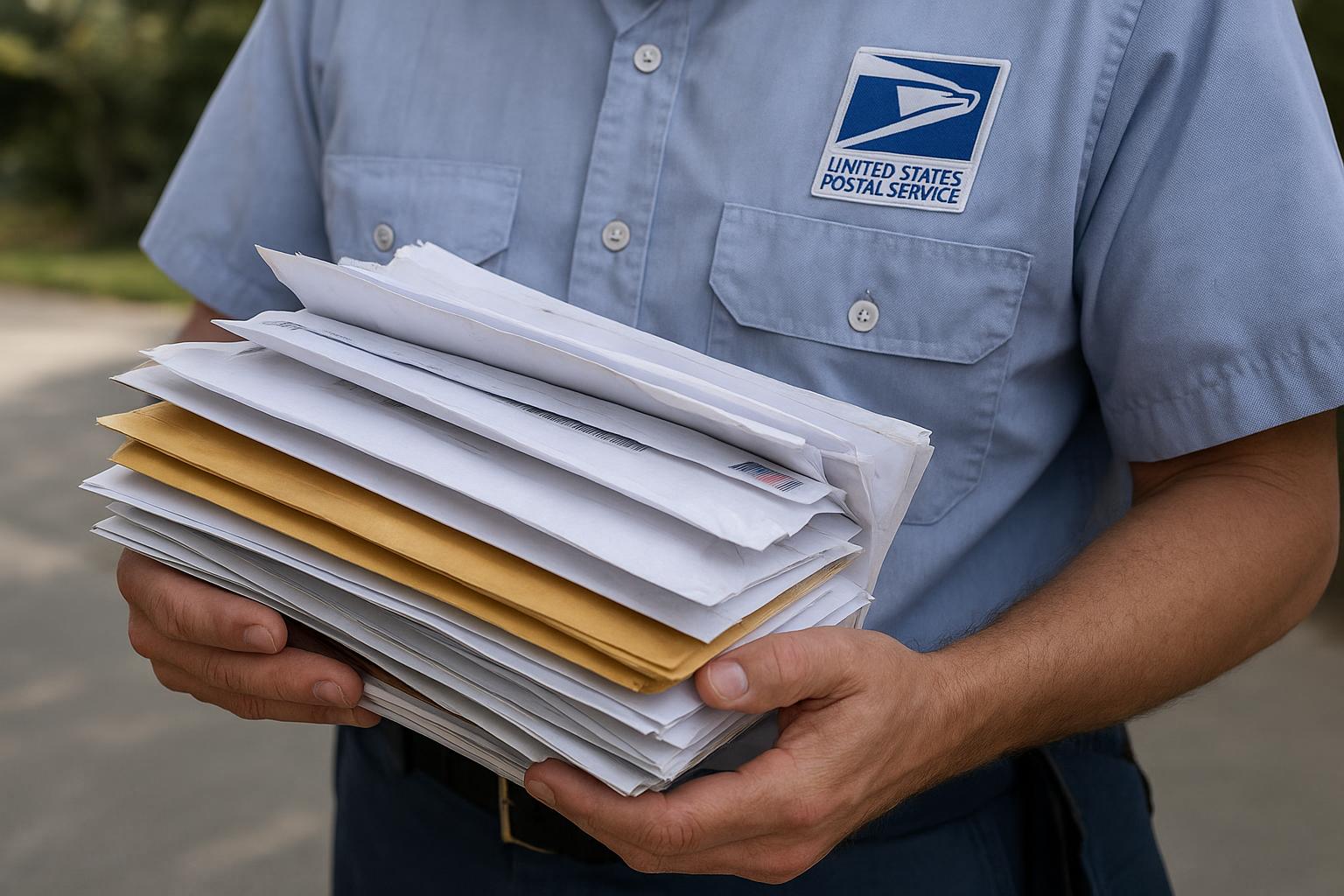
If your letter or package vanished from sight, acting fast usually helps. Waiting a week and hoping it shows up rarely solves anything. Here’s a hands‑on guide you can use right away.
## USPS Lost Mail Search Guide Revealed For Stubborn Delays
## USPS Lost Mail Search Guide: How To Open A Case
### Know The Difference Between Late, Missing, And Lost Mail
Late mail is annoying but common. Missing mail means tracking shows no movement or an unexpected stop that hasn’t been resolved in a reasonable time. Lost mail is where the USPS search process either never locates the item or it’s physically gone and a claim will be needed.
Call it whatever you want, but your steps change depending on the status in the tracking and whether the item was insured. A letter with no tracking is treated differently than a tracked priority package.
### When To Start A Search
Start a search when tracking hasn’t updated for several days after the last scan, or when the estimated delivery window passes. For domestic Priority Mail and Priority Mail Express, start sooner: within 2–3 days of a missed delivery window. For First-Class letters, give it 7–10 business days before escalating, especially if there was no scan history.
If the sender has tracking but you don’t, ask them for the number. If you’re the sender, start the missing mail process as soon as you can. The USPS Lost Mail Search Guide is built around timelines: the sooner you open the case, the better the chance the item turns up.
### What Information You Need Before You Call Or Click
Gather the facts. Don’t wing it. Have these ready:
– Tracking number(s). If you don’t have one, get the sender’s information.
– Sender and recipient names and addresses exactly as written.
– Date of mailing and contents description (value, weight, number of items).
– Proof of purchase or a reciept for postage or insurance, if available.
– Any photos of the package, label, or delivery location.
You’ll sound competent on the phone or online, and that matters. Frontline staff are more likely to dig deeper when you can answer questions quickly.
### How To Use The USPS Tools Correctly
USPS has an online Missing Mail Search and a “Start a Search” form. Use it. Don’t assume filing a claim is the first move — a search request can locate items without needing a claim.
Go to the USPS website, choose “Help,” then “File A Search.” Fill the form carefully. The system asks whether the item has tracking. If it does, paste the number. If not, describe the contents and attach photos if you have them. Keep the submission tight and specific.
You can also call your local post office. Pick the actual post office that was supposed to deliver the item. Explain facts, not feelings. Ask them to check the route scanner and look in the’sort room racks. If they say they’ll call back, write down the person’s name.
### Practical Steps For The Local Post Office Visit
If online or phone attempts don’t resolve things, visit the post office during business hours. Bring proof of ID and any paperwork. Be polite but firm.
Ask for the regular carrier if they’re in. They know the routes and delivery spots. Show photos of the expected package and where it should have been left. If the package required a signature, ask to see the signature log. If the carrier is unavailable, ask to speak to the supervisor.
Don’t waste time on vague complaints. Say: “My Priority package, tracking #XXXX, shows delivered to my address on Tuesday but I don’t have it. Please check the route bags, scanner history, and any undelivered racks.”
### Escalating: Supervisors, Consumer Affairs, And Inspector
If the local office doesn’t find the package, escalate. Ask to speak to a supervisor. If a supervisor confirms they can’t find it, contact USPS Consumer Affairs online or call 1‑800‑ASK‑USPS.
For high-value items or suspicious circumstances, open a case with the Postal Inspection Service. They handle theft, fraud, and criminal issues. If there are patterns (multiple packages missing from the same carrier or neighborhood), insist on an inspection referral.
### Filing An Insurance Claim vs. Filing A Search
These are different actions. A missing mail search tries to find the item. A claim requests reimbursement. If the package was insured, you can file a claim after 7 days for Priority Mail Express, or after the posted delivery window for other services. With insured packages, the USPS often requires you to file a search first before accepting a claim for loss.
If you don’t have insurance, you can still file a claim in certain situations, but it’s harder. Know the rules before you choose. Filing a claim too early can close the search window; filing too late may forfeit reimbursement.
### What To Say When You File A Claim Or Search
Be concise. Include dates, tracking numbers, and a clear list of contents with values. If an item is irreplaceable, say so and explain why standard replacement is impossible. Attach receipts or invoices for the item’s value and for postage and insurance.
If you’re the sender, include proof of mailing and the recipient’s signature if available. If you’re the recipient, ask the sender to start the claim if the label is in their name.
### Tracking Discrepancies And How To Read Scans
Track history matters. A package scanned as “Delivered” but with no exact time or carrier name is suspicious. “Delivered, Left At Front Desk” without a front desk in the address is another red flag.
Some scans are automated and imperfect. A package might be marked “Arrived At Unit,” and then stall. That could be a sorting delay. But if it’s been stuck for more than 48–72 hours with no updates, move to a search.
### Handling International Shipments
International missing mail is slower and messier. Start with the sender contacting the origin post to file an international search request. Use the USPS Global Tracking tool and contact the foreign postal operator when the tracking shows it left the US.
If customs holds the item, ask the recipient to check with their local postal service for customs fees or paperwork. For high-value international packages, open a claim with the sending carrier as well as the origin post.
### Tips For Specific Scenarios
#### Packages Marked Delivered But Not There
Ask neighbors. Check hidden delivery spots: porches, side doors, behind bushes, storage lockers. Check with building management or a doorman. If nothing turns up, file the search and request camera footage from your building if available.
#### Untracked First-Class Letters
These are the hardest to recover. If it’s important, send certified mail next time. If the letter was valuable, ask the sender to file a search anyway and provide a detailed description and estimated date.
#### Mail Marked “Returned To Sender”
If you were expecting something and tracking shows “RTS,” ask the sender to check the return reason. Incorrect address formatting and missing unit numbers are common culprits.
### When To Get The Sender Involved
If you’re the recipient, keep the sender in the loop. Many online sellers require the sender to initiate the claim. If the sender balks, remind them of their buyer protection responsibilities or open a dispute with your payment provider if applicable.
If the sender is a small business, they may be able to re-ship if a claim is pending, but you should get a replacement or refund agreement in writing.
### How Long Should You Wait For A Resolution
Search cases can take up to 14 days domestically for regular mail and longer for international. Priority Mail Express claims are faster. If you don’t hear anything after a reasonable interval, call back, escalate, and document every contact.
Document dates, names, and case numbers. If you escalate to the Postal Inspection Service, that documentation speeds the process.
### Avoiding Future Problems
– Use tracking and signature when the content or value matters.
– Take a photo of the package and label at dropoff.
– Insure expensive items. It’s cheap relative to replacement costs.
– Write addresses clearly and include phone numbers to help carriers clarify delivery.
– For recurring deliveries, ask carriers to leave packages in a consistent sheltered location.
### Dealing With Pattern Problems In Your Neighborhood
If multiple neighbors report lost mail, organize the information and present it to the post office together. Patterns get attention. Get a simple list: dates, tracking numbers, and brief descriptions. Ask for a supervisor to log a formal complaint.
If the issue continues, file a complaint with the Postal Regulatory Commission or consult the Postal Inspection Service. Persistent local problems sometimes require route audits.
### Private Carrier Alternatives And Their Pros And Cons
If USPS service has been unreliable in your area, consider private carriers for future shipments that need guaranteed delivery and claims handling. Private carriers offer different tracking fidelity and often clearer claims processes, but can cost more.
Sometimes seller platforms let you choose the carrier. Think about the tradeoffs: price versus peace of mind.
### What To Expect From The USPS Response
Expect a range: sometimes they find an item in 24 hours; other times it’s never found and you need a claim. Don’t expect miracles, but do expect a process. If you stay organized and push politely, you improve your odds.
Remember that frontline postal employees deal with a huge volume of items. Clear, specific information and calm persistence get results faster than anger.
### Evidence That Strengthens A Claim Or Search
Receipts, photos, and tracking history matter. If you shipped multiple items in a single shipment, list them and their values separately. If the package contained serial-numbered items, include those numbers. Serial numbers and invoices are strong evidence for claims.
If seller records show shipment, keep those emails. If the carrier attempted delivery, get the proof of attempted delivery.
### When To Call Your Bank Or Credit Card
If you paid for an item and have trouble getting a refund from the seller after following the mail and claim process, contact your bank or card issuer for chargeback options. Many banks require you to exhaust seller protections first, but they can be an avenue if the seller is uncooperative.
### Small Things That Make A Big Difference
Label your packages with a return address and a phone number. Add a “Do Not Leave Without Signature” sticker for high-value items. If you live in an apartment building, ask for delivery instructions that match the carrier’s workflow.
Use delivery alerts from the USPS so you know the minute a package is scanned. That helps you act quickly if something goes wrong.
### Real Cases And Quick Fixes
I once had a package marked delivered that turned up in a different mailbox. The carrier admitted a mis-scan after I calmly showed the supervisor the tracking history and asked them to check adjacent mailboxes. Another time a priority box sat in a regional facility for two days; a quick online search submission forced a manual pull.
Those examples aren’t lucky breaks — they happened because the sender and recipient acted quickly and supplied clean, specific info.
### When The System Fails
Sometimes threads are lost permanently. When that happens, focus on the next steps: claim, replacement, and prevention. Learn what went wrong and change approach for the next shipment. It’s not satisfying, but practical.
If a pattern of losses persists and local postal management fails to respond, productively escalate to national consumer services and the Postal Inspection Service. Keep records. Be persistent and clear.
Keep in mind that small differences in how you file and what you provide can speed up resolution. Use the USPS Lost Mail Search Guide steps above as a checklist for your next missing package report. The process is rarely quick or glamorous, but it works better when you approach it systematically and without false expectations.
#### Quick Checklist To Bring To The Post Office
1. Tracking number and proof of postage.
2. Photos of the package and label.
3. Exact addresses and dates.
4. Proof of value (receipts, invoices).
5. A calm but firm request for a route and sort room check.
Don’t let paperwork intimidate you. Being prepared cuts through confusion and prevents the kind of back‑and‑forth that leaves packages floating in limbo. If you follow the USPS lost mail search guide steps and push at the right points, you stand a much better chance of getting your mail back or getting reimbursed.