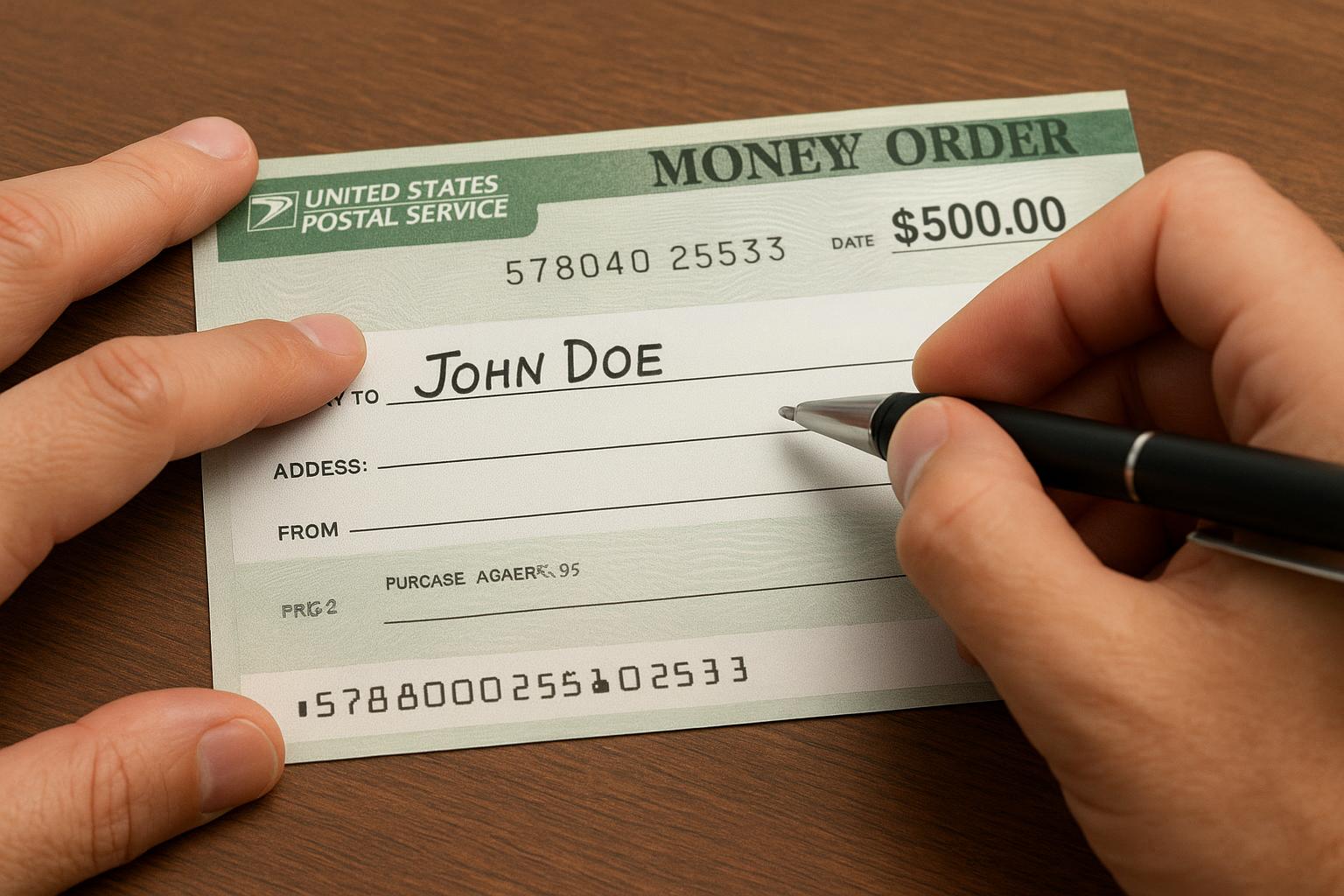
## Step-By-Step Guide To Filling Out A USPS Money Order Quickly
A money order is simple, but the small details matter. This step-by-step guide to filling out a usps money order shows what to write, where to write it, and what to keep so the payment actually works when the other person tries to cash it.
### Why Care About Money Order Filling
A usps money order is prepaid and trusted, but mistakes create delays. If the payee line is wrong or you sign the wrong place, the bank or post office can refuse payment. Good money order filling keeps the funds secure and makes refunds or replacements easier if something goes sideways.
### What To Bring To The Post Office
– Valid photo ID (driver’s license, passport).
– Exact cash or debit card for the amount plus the small fee.
– Pen with permanent ink — not a pencil.
– The recipient’s full legal name and, optionally, their address.
### Step-By-Step Filling Process
Follow these steps at the counter or right after you buy the money order. If you’re buying several, fill them one at a time.
1. Confirm The Amount
#### Check The Printed Amount First
Make sure the numeric and written amounts match the value you requested. The post office prints the amount, but confirm it before you touch the form.
2. Fill In The Payee Line
#### Use The Recipient’s Full Name
Write the payee’s name exactly as they cash checks—no nicknames. A clear, full name prevents disputes. If it’s going to a business, use the business’s legal name.
3. Add Your Name On The Purchaser Line
#### Sign Where Required
Sign the purchaser line exactly as your ID shows. That signature links you to the transaction. Do not sign the back.
4. Add Your Address And Memo If Useful
#### Give A Return Point
Write your address (or at least a city) so the post office can contact you about a returned money order. Use the memo or account number space if you want to record what the payment is for.
5. Keep The Reciept (Yes, Keep It)
#### Save The Stub
Tear off and keep the receipt stub. It’s needed to track or cancel a usps money order. Without it, a refund or inquiry becomes slower.
6. Use Ink And Write Legibly
#### No Erasures
Use a pen and write clearly. If you make a mistake, do not attempt to erase or scribble. Ask the clerk how to void the money order and get a new one.
7. Ask For A Post Office Stamp Or Date If Needed
#### Some Offices Annotate The Purchase
Request a dated postmark or clerk’s stamp if you need proof of purchase date. That helps with deadlines or disputes.
8. Know How To Cancel Or Replace
#### Keep Documentation
If the money order is lost or stolen, you’ll need the receipt and an IRS form if the amount is large. The post office can guide you through a trace and replacement, but the process is faster when your money order filling was complete and the reciept is intact.
### Common Mistakes To Avoid
– Leaving the payee blank. Never hand someone a blank payee line.
– Signing the wrong field. Don’t sign the back; sign the purchaser line.
– Using light ink or pencil. It can fade or be altered.
– Throwing away the receipt. That’s the most common problem when people want a refund.
### If You’re Filling Multiple Money Orders
Handle one money order at a time. Write the payee, sign, and store each finished money order in a folder or envelope. This prevents swapping names or losing track. Proper money order filling takes a minute per form and saves hours later.
### Special Cases And Tips
– For a payment to a landlord or foreign recipient, double-check spelling and format. Banks overseas can be strict.
– If the payee requests you to leave the payee line blank so they can fill it later, insist on writing it yourself. A blank payee line lets anyone cash it.
– If the recipient can’t cash a usps money order locally, consider a bank check or wire transfer instead.
### Tracking And Fees
USPS fees are small, but replace/trace fees and time can add up. Keep your receipt for tracking; the post office can start a trace only with that information. Proper money order filling reduces the chance you’ll need to use those services.